Is Delta 9 Legal in Connecticut? 2026 Legal Guide
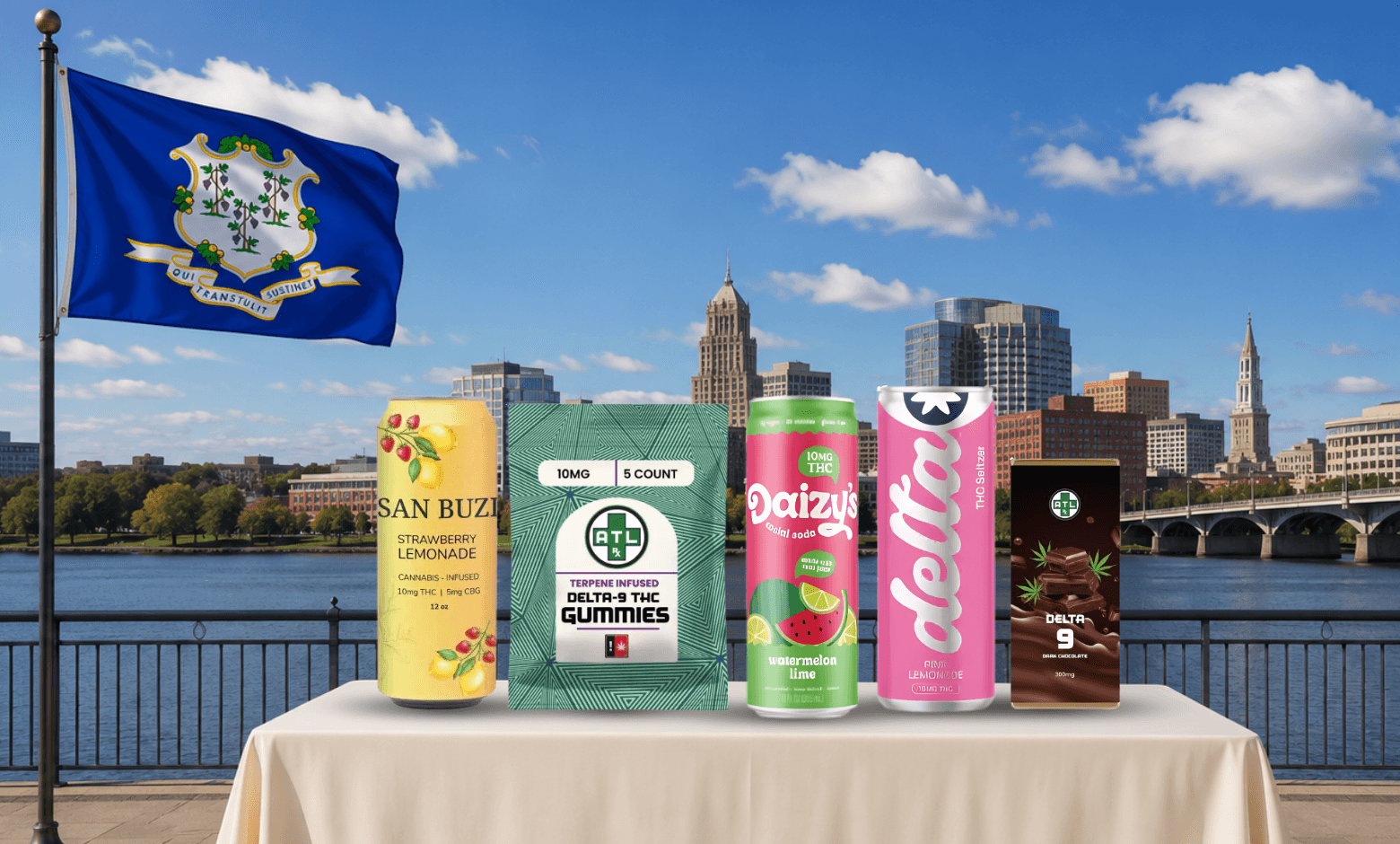
Delta 9 Legal Status in Connecticut:
Yes, hemp-derived Delta 9 THC is legal in Connecticut for adults 21 and older when the product is sourced from federally compliant hemp containing no more than 0.3% Delta 9 THC by dry weight.
If you have been searching for “Is Delta 9 Legal in Connecticut,” you are in the right place. Connecticut allows hemp-derived Delta 9 THC products under specific conditions, and the rules tightened meaningfully in 2025 and continue to evolve in 2026. This guide breaks down the federal baseline, Connecticut’s state framework, the recent Public Act 25-101 and Public Act 25-166 changes, the upcoming federal Section 781 update, and what every adult shopper in Hartford, New Haven, Stamford, Bridgeport, and across the state should know before buying.
Key Takeaways
- 01Connecticut permits hemp-derived Delta 9 THC products that satisfy both the federal hemp definition and the state’s product-tier rules.
- 02The governing federal benchmark, set by the 2018 Agriculture Improvement Act, is 0.3% Delta 9 THC measured against a plant’s dry weight.
- 03For general retail, low-potency hemp products such as edibles, topicals, tinctures, and concentrates may not exceed 1 mg of total THC per serving and 5 mg per container.
- 04A photo ID confirming age 21+ is mandatory both at the point of sale and at delivery.
- 05A pending federal change, Section 781 within H.R. 5371, is scheduled to take effect on November 12, 2026, narrowing the hemp definition and limiting finished consumer goods to 0.4 mg of total THC per container.
- 06Infused beverages are governed by a separate cap: no more than 3 mg total THC per container, in containers of at least 12 fluid ounces.
Understanding Delta 9 THC: Hemp vs. Cannabis Origins
Delta 9 tetrahydrocannabinol, usually shortened to Delta 9 THC or Δ9-THC, is among the most studied compounds produced by the Cannabis sativa L. plant. It’s also the molecule most frequently associated with cannabis’s psychoactive effects.
The chemistry doesn’t change based on origin, but the legal classification does. Two regulatory categories matter:
- Hemp-derived Delta 9: Extracted from cannabis plants that test at 0.3% Delta 9 THC or lower by dry weight. These products fall under the 2018 Farm Bill and are federally permissible.
- Cannabis-derived (marijuana-derived) Delta 9: Sourced from plants that exceed the 0.3% threshold, placing them outside the federal hemp definition and into state-regulated cannabis programs.
Put simply, the source plant’s THC concentration, not the molecule itself, determines which rulebook applies.
How Federal Law Frames the Question
The 2018 Farm Bill Foundation
Passed as the Agriculture Improvement Act of 2018, this legislation removed hemp from Schedule I of the Controlled Substances Act. It established a working federal definition: any Cannabis sativa L. plant, or product derived from it, that contains no more than 0.3% Delta 9 THC on a dry-weight basis, qualifies as hemp.
Because of this carve-out, hemp-sourced Delta 9 products such as Delta 9 gummies, beverages, baked edibles, and similar formats became legal at the federal level when they meet the threshold and comply with applicable rules.
Connecticut’s Layered Regulatory Approach
Connecticut authorized its own hemp program following federal legalization. The state’s Department of Agriculture oversees licensing for cultivators and processors, while consumer-facing rules sit primarily with the Department of Consumer Protection (DCP).
Senate Bill 1201 and Adult-Use Cannabis (2021)
Connecticut opened the door to recreational cannabis when SB 1201, the Act Concerning Responsible and Equitable Regulation of Adult-Use Cannabis (RERACA), was signed in 2021. Under that law, residents 21 and older can carry up to 1.5 ounces of cannabis flower in public, and may store as much as 5 ounces at home or in a locked vehicle compartment such as the glove box or trunk.
Public Act 25-166 and the Tiered Hemp System
Connecticut passed two major hemp and cannabis laws in 2025, and a complete picture requires both.
Public Act 25-101 (HB 6855) addresses the consumer-facing hemp framework:
- Refines the “moderate-THC hemp product vendor” classification, which requires a DCP certificate of registration to sell moderate-THC hemp products at retail.
- Mandates 21+ age verification with a valid government-issued ID at the time of purchase and again at delivery for moderate-THC hemp products and hemp flower (effective October 1, 2025).
- Tightens packaging, labeling, and testing standards for manufacturers of hemp products.
- Restricts infused beverages from containing additives that increase potency, toxicity, or addictive properties, including caffeine other than naturally occurring caffeine in chocolate.
Public Act 25-166 (HB 7181) is the broader enforcement law:
- Establishes the Cannabis Control Division within the Department of Consumer Protection to oversee all cannabis and hemp product enforcement statewide.
- Creates the State-Wide Cannabis and Hemp Enforcement Policy Board.
- Adds a vape dealer registration regime.
- Increases potency limits for cannabis products sold at licensed dispensaries (cannabis flower up to 35%, other non-vape cannabis products up to 70%, effective October 1, 2025).
- Makes it a class E felony for cannabis establishments to sell synthetic cannabis or to sell cannabis or paraphernalia to anyone under 21.
The result is a multi-tier system: low-THC items at general retail, moderate-THC items at registered vendors, and higher-potency products at licensed dispensaries only — backed by a substantially expanded enforcement apparatus.
Where to Purchase Delta 9 in Connecticut
Connecticut consumers have several legitimate channels:
- Licensed dispensaries for higher-potency adult-use products
- DCP-registered hemp retailers for moderate-THC items
- General retail outlets for compliant low-THC hemp goods
- Online hemp retailers that ship federally compliant Delta 9 to Connecticut addresses with age verification at checkout and delivery
Verifying That a Product Is Actually Compliant
Before any purchase, confirm the following:
- The packaging declares Delta 9 THC content at 0.3% or lower by dry weight.
- A current third-party Certificate of Analysis (COA) is accessible, typically through a QR code printed on the label.
- Per-serving and per-container THC values fall within Connecticut’s applicable tier.
- The retailer holds the appropriate state credentials for the product category being sold.
What Section 781 Means After November 12, 2026
A federal restructuring is scheduled for late 2026. Section 781 of H.R. 5371 will:
- Redefine “hemp” as Cannabis sativa L. with total tetrahydrocannabinol content (including THCA and THC isomers) not exceeding 0.3% on a dry-weight basis post-decarboxylation — a shift away from the current Delta 9-only measurement.
- Cap finished products at 0.4 mg of total THC per container for any item meant to be ingested, inhaled, or applied topically.
- Prohibit synthetic and converted cannabinoids that the cannabis plant cannot naturally produce, or that are manufactured outside the plant.
- Direct the FDA to publish reference lists of naturally occurring cannabinoids, THC-class cannabinoids, and compounds with similar effects, plus a clarified definition of “container.”
If enacted as written, this would disqualify a substantial portion of today’s Delta 9 edibles and beverages from federal compliance. Always check the latest guidance before buying.
Final Thoughts on Delta 9 in Connecticut
Hemp-derived Delta 9 THC remains accessible to Connecticut adults in 2026, but the framework is more layered than a simple yes-or-no answer suggests. Buyers should pay attention to the source of the product, its tier classification, the COA, and the upcoming federal changes scheduled for November 12, 2026, which could reshape the entire compliant-product landscape. When in doubt, verify the current law before purchasing.
Frequently Asked Questions
Are Delta 9 Gummies Permitted in Connecticut?
+
Yes, provided they’re hemp-derived, meet the 0.3% dry-weight rule, and stay within the THC limits set for their retail tier.
Can Connecticut Residents Order Delta 9 Online?
+
Yes. Compliant hemp-derived Delta 9 products can be shipped into Connecticut as long as the retailer verifies age at checkout and at delivery.
What’s the Minimum Age?
+
21. Identification is checked both when ordering and when receiving the product.
Does Delta 9 Trigger a Positive Drug Test?
+
It can. Workplace screenings detect THC metabolites and don’t differentiate between hemp-sourced and cannabis-sourced consumption. Anyone facing employment, athletic, or court-related testing should plan accordingly and consult their employer’s policy.
Is Flying with Delta 9 from Connecticut Allowed?
+
Federally compliant hemp products generally travel with you across state lines, but each destination state has its own rules. Verify before you fly.
Is Delta 10 Treated the Same Way?
+
Connecticut applies the same framework to Delta 10 as it does to Delta 8. That means naturally occurring Delta 10 in compliant hemp counts toward the state’s total THC limits, but synthetically converted Delta 10, in the form most commonly sold in the U.S., falls within Connecticut’s prohibition on synthetic cannabinoids and is treated as a Schedule I controlled substance. Higher-potency Delta 10 products in any form move only through licensed cannabis channels.
Why Trust This Guide
- ATLRx has sold third-party lab-tested hemp products out of Georgia since 2019.
- Every real batch we sell is tested by an accredited outside lab, with the Certificate of Analysis published before you buy.
- We operate 3 real physical stores in Georgia — this isn't a drop-shipped storefront.
- Legal information is rechecked and updated as rules change, not published once and forgotten.
Don't Trust the Label. Check the Lab.
ATLRx publishes third-party Certificates of Analysis for real batches so you can verify cannabinoid content before you buy — not just take the package's word for it.
View Lab Results →Have Questions?
Visit an ATLRx store in Georgia and talk to our team.
Real Customers, Real Reviews
What Customers Are Saying
“Exactly what was promised excellent product”
“Really nice high”
“Very good! Gives me energy!”

Jen Hight
Cannabis Industry Expert & Compliance Specialist Jen Hight is a cannabis industry professional with extensive experience in hemp compliance, product development, and consumer education. With a background in regulatory affairs and a passion for helping consumers navigate the complex world of cannabinoids, Jen provides accurate, up-to-date information on hemp legality and best practices. Her work focuses on making cannabis knowledge accessible while ensuring readers understand both the opportunities and responsibilities that come with legal hemp products.
View all articles →Keep Learning

Where to Buy Delta 9 in Texas?
Delta 9 Availability in Texas: Yes. Hemp-derived Delta 9 is legal to buy in Texas in August 2026. To qualify, a product has to come from hemp and test at 0.3% or less total THC on a dry weight basis. Texas has computed that figure as (0.877 x THCA) + Delta 9 since March 31, […]
Aug 7, 2026 · 26 min read

Where to Buy Delta 9 in Oklahoma?
Delta 9 Availability in Oklahoma: Yes. Delta 9 THC derived from hemp is legal in Oklahoma starting in 2026 for adults 21 and older. It must be made from hemp, not marijuana, and contain less than 0.3% Delta-9 THC by dry weight. Medical marijuana does not require a card. You can buy it online or […]
Aug 5, 2026 · 23 min read

Where to Buy Delta 9 in Iowa?
Delta 9 Availability in Iowa: Yes, hemp-derived Delta 9 is legal in Iowa in 2026, but only if it follows the state’s rules. Consumable hemp products cannot contain more than 4 mg of total THC per serving and 10 mg of total THC per container. The product also has to come from legal hemp, be […]
Aug 4, 2026 · 25 min read

Where to Buy Delta 9 in South Carolina?
Delta 9 Availability in South Carolina: A hemp-derived Delta 9 THC product that contains no more than 0.3% Delta 9 THC by dry weight is currently legal for sale in South Carolina under the 2018 Farm Bill and South Carolina’s Hemp Farming Act (Chapter 55, Title 46 of the SC Code). Marijuana-derived Delta 9 remains […]
Jul 30, 2026 · 18 min read
Stay Informed
New product releases, hemp law updates, and useful cannabinoid guides.