Is THCA Legal? Complete State-by-State Guide 2026
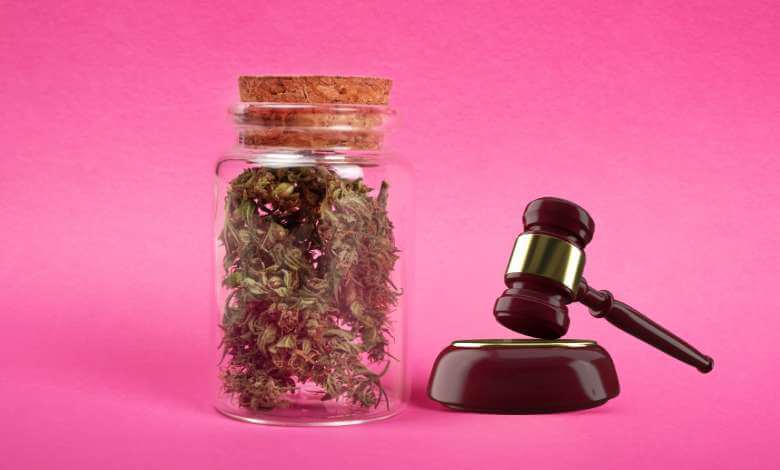
Federally, yes, for now. The 2018 Farm Bill treats hemp-derived THCA as legal hemp so long as the delta-9 THC reading stays at or below 0.3% of dry weight. That flips on November 12, 2026, when Section 781 switches the federal test to total THC, and total THC counts THCA. Your state may already be stricter.
Below you’ll find the federal rules, what lands in November, where your own state sits today, what happens when you order online, and how to make sense of a lab report.
THCA is part of what we sell, so we’re not a neutral party here. Even so, we’d rather be straight with you about the deadline than take an order you can’t legally receive.
Keep Browsing
Explore Our THCa Categories
Shop real THCa products and collections.


THCA legal status at a glance
| Question | Answer as of August 2026 |
|---|---|
| Federally legal right now? | Yes, if hemp-derived and reading at or below 0.3% delta-9 THC on dry weight |
| Governing law today | 2018 Farm Bill (Agriculture Improvement Act of 2018), written into 7 U.S.C. 1639o |
| What changes | The hemp test moves to total THC instead of delta-9 alone |
| The new law | Section 781, H.R. 5371, Public Law 119-37, signed November 12, 2025 |
| Effective date | November 12, 2026 |
| New product cap | 0.4 mg total THC in each container |
| Does state law override? | Your state can be stricter. It can’t rescue a product Washington has banned |
| Does ATLRx ship everywhere? | No. See our state table below |
How THCA is legal right now: the 0.3% delta-9 rule
THCA stands for tetrahydrocannabinolic acid. In living, unheated cannabis, THC sits mostly in this acidic form. Add heat, and a reaction called decarboxylation rewrites it into delta-9 THC. That’s why the same flower reads one way raw and another way once it’s been lit.
An entire THCA market grew inside a gap the 2018 Farm Bill left open. Under that law, a cannabis plant qualifies as hemp when its delta-9 THC reading stays at or below 0.3% of dry weight. Congress put that test into 7 U.S.C. 1639o. It says nothing at all about THCA products.
A flower can read 20% THCA alongside 0.2% delta-9 and still clear the current federal bar. Hemp, not marijuana. One measurement decision is holding the whole category up.
Two consequences fall out of that, and both land on you:
- What makes it legal is the test, not the plant. Screen for delta-9 alone, and the sample passes. Screen for total THC, and the same sample fails.
- Congress caught on. Section 781 is the response.
The Congressional Research Service has published plain-English briefs covering the old test and the new one. Go straight to those if you’d rather read the government’s own wording than ours.
What changes on November 12, 2026
Section 781 was enacted into law aboard H.R. 5371, the funding package enacted as Public Law 119-37 and signed on November 12, 2025. Lawmakers built in a twelve-month runway. It expires November 12, 2026.
Here’s what lands.
1. Hemp gets redefined by total THC
The replacement definition looks at total tetrahydrocannabinols rather than delta-9 by itself, and THCA is inside that total. Cross 0.3% total THC on dry weight, and the material stops qualifying as hemp.
The arithmetic, borrowed from the USDA’s own Domestic Hemp Production Program, runs like this:
Total THC = (THCA × 0.877) + Delta-9 THC
Try it against something ordinary. Take a flower reading 22% THCA and 0.2% delta-9:
(22 × 0.877) + 0.2 = 19.5% total THC
The bar is 0.3%. Very little of what’s on shelves today survives that math, and that’s the plain answer. It’s also why this one date outweighs anything happening in a single statehouse.
2. A 0.4 mg per container cap on finished products
Any finished cannabinoid product meant for people or animals picks up a ceiling of 0.4 mg total THC in each container. Container here means whatever wrapping actually touches the product: the jar, the bottle, the pouch, the cartridge.
3. Cannabinoids that the plant doesn’t make are excluded
If cannabis doesn’t produce a cannabinoid itself, or a lab assembles it outside the plant, it stops counting as hemp entirely. Anything in that bucket lands back under Schedule I of the Controlled Substances Act, which puts the DEA, rather than the USDA hemp program, in charge of it.
4. Congress is still moving on this
The Senate cleared a continuing resolution in August 2026 that would hold most of Section 781 back until December 11, 2026. As of the date stamped at the top of this page, the House hadn’t taken it up, and no signature had followed. Absent that, November 12, 2026, is still the operative law.
Other bills would move the date out by years, strike the hemp provisions altogether, or trade them for a federal licensing regime. Not one has made it through.
The White House has spoken up, too. The Office of Management and Budget wrote to Congress in June 2026, asking for either a real regulatory framework or a postponement. A letter doesn’t rewrite a statute, but it does tell you November isn’t locked down politically.
ATLRx’s position is straightforward. Build your plans around November 12, 2026. If relief shows up, treat it as found money.
THCA legal status by state, August 2026
Washington sets the minimum. Your state decides what actually reaches your porch.
We sort states into four buckets, because a flat legal-or-illegal list hides the thing you need. A state can welcome THCA inside a licensed dispensary while blocking every mail-order crossing its border. For a buyer, those are opposite answers.
| Tier | What it means for you |
|---|---|
| Open retail | Hemp-derived THCA tracks the federal standard. You can buy it and have it delivered |
| Restricted | Permitted, but fenced in: total-THC testing, potency or serving caps, licensing, age gates, or one format banned |
| Dispensary only | Sold through the state’s licensed cannabis system. Direct-to-consumer hemp shipments don’t get through |
| Prohibited | Treated as a controlled substance. Don’t place the order |
THCA legal status in all 50 states
| State | Tier | Notes | Do we ship? |
|---|---|---|---|
| Alabama | Restricted | HB 445 limits smokable products and direct shipment | Check at checkout |
| Alaska | Dispensary only | Licensed cannabis system only | Check at checkout |
| Arizona | Dispensary only | Licensed cannabis system only | Check at checkout |
| Arkansas | Prohibited | Intoxicating hemp restrictions in place, status contested in federal litigation | No |
| California | Restricted | AB 45 and follow-on rules restrict inhalable hemp | Check at checkout |
| Colorado | Dispensary only | Intoxicating hemp is a dispensary channel only | Check at checkout |
| Connecticut | Restricted | Potency caps route most products to licensed retail | Check at checkout |
| Delaware | Dispensary only | HB 1 restrictions | Check at checkout |
| Florida | Open retail | Tracks the federal hemp standard, age, and packaging rules that apply | Yes |
| Georgia | Restricted | SB 494 and state hemp rules apply | Check at checkout |
| Hawaii | Prohibited | Inhalable hemp cannabinoids are prohibited | No |
| Idaho | Prohibited | All THC is prohibited, including hemp-derived THCA | No |
| Illinois | Restricted | Ongoing rulemaking on intoxicating hemp | Check at checkout |
| Indiana | Restricted | Age and labeling rules apply | Check at checkout |
| Iowa | Prohibited | Consumable hemp THC limits effectively exclude THCA flower | No |
| Kansas | Restricted | THC limits interpreted strictly | Check at checkout |
| Kentucky | Restricted | 302 KAR 50:070 sets state limits | Check at checkout |
| Louisiana | Restricted | Inhalable hemp restricted | Check at checkout |
| Maine | Open retail | Tracks the federal hemp standard | Yes |
| Maryland | Dispensary only | Intoxicating hemp routed to licensed retail | Check at checkout |
| Massachusetts | Restricted | Regulator guidance limits hemp THC products | Check at checkout |
| Michigan | Restricted | Intoxicating hemp is regulated under state cannabis law | Check at checkout |
| Minnesota | Restricted | Low-dose THC framework, flower not permitted | No |
| Mississippi | Restricted | Smokable hemp restricted | Check at checkout |
| Missouri | Open retail | Tracks the federal hemp standard | Yes |
| Montana | Dispensary only | Licensed cannabis system only | Check at checkout |
| Nebraska | Restricted | Enforcement varies by county | Check at checkout |
| Nevada | Dispensary only | Licensed cannabis system only | Check at checkout |
| New Hampshire | Open retail | Tracks the federal hemp standard | Yes |
| New Jersey | Dispensary only | S4509 routes intoxicating hemp to licensed retail | Check at checkout |
| New Mexico | Restricted | State hemp rules apply | Check at checkout |
| New York | Restricted | Total-THC and potency caps | Check at checkout |
| North Carolina | Open retail | Tracks the federal hemp standard, age 21+ | Yes |
| North Dakota | Prohibited | Smokable hemp prohibited | No |
| Ohio | Restricted | SB 56 moved intoxicating hemp into licensed channels | Check at checkout |
| Oklahoma | Open retail | Tracks the federal hemp standard | Yes |
| Oregon | Dispensary only | Intoxicating hemp cannabinoids routed into the OLCC-licensed system | No |
| Pennsylvania | Open retail | Tracks the federal hemp standard | Yes |
| Rhode Island | Prohibited | THC above 0.3% total requires a medical program | No |
| South Carolina | Open retail | Tracks the federal hemp standard | Yes |
| South Dakota | Restricted | Enforcement varies, and smokable hemp is contested | Check at checkout |
| Tennessee | Restricted | Public Chapter 526 moved hemp to the Alcoholic Beverage Commission and restricts products at or above 0.3% total cannabinoids, including THCA. Core provisions January 1, 2026 | Check at checkout |
| Texas | Prohibited | Reinstated 2021 DSHS controlled-substance definitions, effective July 31, 2026, after Sky Marketing. Possession can bring a state jail felony charge | No |
| Utah | Restricted | THCA flower is not permitted in the state hemp program | Check at checkout |
| Vermont | Dispensary only | Licensed cannabis system only | Check at checkout |
| Virginia | Restricted | SB 903 total-THC and serving limits | Check at checkout |
| Washington | Restricted | Intoxicating hemp routed to licensed retail | Check at checkout |
| West Virginia | Restricted | State hemp rules apply | Check at checkout |
| Wisconsin | Open retail | Tracks the federal hemp standard | Yes |
| Wyoming | Restricted | Enforcement varies | Check at checkout |
Shop THCa
View all →

Locate your state, then let checkout confirm it. Orders bound for states we can’t serve get stopped in the cart, and that blocklist follows our current compliance rules. Where this table and the cart disagree, believe the cart.
Is THCA legal in Texas?
No. Texas has prohibited THCA since July 31, 2026.
What happened is that Texas health regulators switched their 2021 scheduling language back on. Those definitions cover “tetrahydrocannabinols” and “marihuana extract,” and they’d been frozen by a court order since 2021 until the Texas Supreme Court lifted it in Texas DSHS v. Sky Marketing Corp., decided May 1, 2026.
In practice, hemp-derived intoxicating cannabinoids like THCA no longer register as lawful hemp anywhere in Texas. Holding one can bring a state jail felony charge. Please weigh that seriously if Texas is home.
There’s a second Texas rule, adopted by DSHS in March 2026, that would combine delta-9 and THCA into one test. Litigation over it is still running, and it isn’t the thing driving the ban.
We don’t ship THCA products to Texas.
Is THCA legal in California?
Only in a limited form. AB 45 lets California allow hemp-derived cannabinoids, but the state fences off inhalable products and layers extra requirements onto online sales. THCA flower and THCA vapes absorb most of that.
California also tightened ahead of the federal deadline, so anything written before 2026 is worth discarding. Confirm the current rule before ordering, and let our cart tell you where our California policy stands today.
Can you buy THCA Online Legally?
Yes, in states that permit it, from a seller who plays it straight.
Federal law currently allows hemp clearing the 0.3% delta-9 THC level to travel by mail. Three things narrow that in practice:
- Your state. Direct-to-consumer shipment of inhalable hemp is off-limits in some states, even where possession carries no penalty.
- The carrier. Shipping companies run their own hemp policies and paperwork requirements.
- The seller. Anyone operating responsibly stops restricted-state orders in the cart instead of shipping and hoping.
Three questions worth asking before you order anywhere:
- Does a current lab report exist for the specific batch going into your cart?
- Does the site stop restricted-state orders, or will it take any address you type?
- Is the testing lab independent and accredited, or is the paperwork in-house with no accreditation?
A site willing to send THCA flower into Idaho is telling you how it handles everything else.
Traveling and flying with THCA
Hemp meeting the current federal definition is lawful, and airport screening exists to find security threats, not cannabinoids. None of that makes travel risk-free.
Three things worth knowing:
- Screeners hand suspected violations to local police. Local police enforce local law.
- You land in a state, not in federal airspace. Arriving somewhere that prohibits THCA is a state-law problem, no matter how you traveled.
- THCA flower looks and smells like marijuana. Roadside and airport encounters usually end with a field test reading delta-9, and untangling that takes time even when you’re clean.
Traveling with hemp? Bring the printed COA and keep the original labeled packaging. Paperwork won’t rewrite a statute, but it does answer the opening question in any encounter.
How to read a COA before you buy
The lab report is the most useful document in this whole category, and hardly anyone opens it. Work through it in this order.
1. Match the batch. Whatever batch or lot number sits on the report needs to appear on your package, too. Numbers that don’t line up mean the report describes something other than what you bought.
2. Check when it was run. Reports age. Anything past twelve months deserves a question.
3. Find total THC, not just delta-9. Hunt for a line reading “Total THC.” If only delta-9 appears, run the arithmetic yourself. That’s precisely the figure the federal standard adopts after November 12, 2026, so the skill pays for itself.
4. Confirm the lab is independent and accredited. ISO/IEC 17025 accreditation, and a lab the brand doesn’t own.
5. Check the full panel. Real testing covers potency plus pesticides, heavy metals, residual solvents, and microbials. Potency by itself is half a report.
Will THCA show up on a drug test?
Yes, it can. Workplace panels don’t hunt for THCA or delta-9 directly. What they screen for is THC-COOH, a byproduct left behind once your system breaks THC down, and THCA can leave it too.
Anyone facing workplace, probation, or athletic screening should handle THCA exactly like any other THC product. Being legal federally won’t shield you from a positive result or from company policy.
What to do before November 12, 2026
- Get comfortable with the total THC arithmetic. (THCA × 0.877) + delta-9. Once it’s second nature, any COA takes you ten seconds.
- Start with your own state. Several tightened ahead of Washington. Texas shut THCA down outright on July 31, 2026, and Tennessee is phasing in stricter rules.
- Track Congress. A short delay cleared the Senate and stalled in the House. Longer extensions, an outright repeal, and a full federal framework are all sitting in committee. Any one of them redraws the timeline.
- Buy where batch-matched COAs get published. Testing becomes the whole game after the switch. Sellers are casual about lab reports today, which won’t clear a stricter bar.
- Come back to this page. It gets reviewed at the start of each month, and the same day whenever the law shifts.
Frequently Asked Questions
Is THCA Legal in All 50 States?
+
No, and it isn’t close. Federal law permits THCA today, but states diverge sharply. Some prohibit it outright, some confine it to licensed dispensaries, and others allow it behind potency, testing, or format limits. Find your state in the table above, then let checkout confirm it.
Is THCA Legal Federally?
+
Yes, for now. Under the 2018 Farm Bill, hemp-derived THCA counts as legal hemp whenever the delta-9 reading stays at or below 0.3% of dry weight. Come November 12, 2026, Washington swaps that test for one built on total THC, which includes THCA, and very little of today’s flower clears it.
Will THCA Be Banned in 2026?
+
Effectively, yes. Section 781 never names THCA. What it does, starting November 12, 2026, is rewrite the hemp test around total THC, and total THC includes THCA. Finished products also pick up a ceiling of 0.4 mg total THC per container. Most of what’s on shelves today fails both. The Senate cleared a measure in August 2026, pushing most of this to December 11, 2026, but nobody has signed it.
Does THCA Get You High?
+
Yes, once it’s heated. Raw THCA isn’t intoxicating on its own. Applying heat and decarboxylation turns it into delta-9 THC, so lighting it, vaping it, or baking with it produces THC. Eating raw flowers doesn’t trigger the same conversion.
Is THCA Considered a Drug?
+
Not federally today, provided it came from hemp. Hemp-derived THCA, clearing the 0.3% delta-9 bar, sits outside the controlled substance schedules. Marijuana-derived THCA doesn’t. After November 12, 2026, anything above 0.3% total THC drops out of the hemp definition and gets handled as marijuana federally.
Is THCA Legal to Ship?
+
Yes, into states that permit it. Hemp, cleared of the current federal ban, can travel by mail. Some states still block direct-to-consumer shipment of inhalable hemp, and carriers layer their own policies on top. We stop restricted-state orders in the cart rather than shipping them.
Is THCA Legal in Tennessee?
+
Only inside strict limits, and generally not as a flower. Public Chapter 526 handed hemp oversight to the Alcoholic Beverage Commission and restricts anything reading 0.3% or higher in total cannabinoids, which captures THCA. Core provisions landed January 1, 2026, with more phasing in through the year. Check current state guidance first.
Where Is THCA Legal in 2026?
+
Nine states currently sit in our open-retail tier: Wisconsin, South Carolina, Pennsylvania, Oklahoma, North Carolina, New Hampshire, Missouri, Maine, and Florida. Most of the rest fence it in with total-THC testing, potency caps, format bans, or dispensary-only channels. Several prohibit it. The four-tier table above has your state.
Why Trust This Guide
- ATLRx has sold third-party lab-tested hemp products out of Georgia since 2019.
- Every real batch we sell is tested by an accredited outside lab, with the Certificate of Analysis published before you buy.
- We operate 3 real physical stores in Georgia — this isn't a drop-shipped storefront.
- Legal information is rechecked and updated as rules change, not published once and forgotten.
Don't Trust the Label. Check the Lab.
ATLRx publishes third-party Certificates of Analysis for real batches so you can verify cannabinoid content before you buy — not just take the package's word for it.
View Lab Results →Have Questions?
Visit an ATLRx store in Georgia and talk to our team.
Real Customers, Real Reviews
What Customers Are Saying
“Exactly what was promised excellent product”
“Really nice high”
“Very good! Gives me energy!”

Jen Hight
Cannabis Industry Expert & Compliance Specialist Jen Hight is a cannabis industry professional with extensive experience in hemp compliance, product development, and consumer education. With a background in regulatory affairs and a passion for helping consumers navigate the complex world of cannabinoids, Jen provides accurate, up-to-date information on hemp legality and best practices. Her work focuses on making cannabis knowledge accessible while ensuring readers understand both the opportunities and responsibilities that come with legal hemp products.
View all articles →Keep Learning
Best THCA Flower 2026
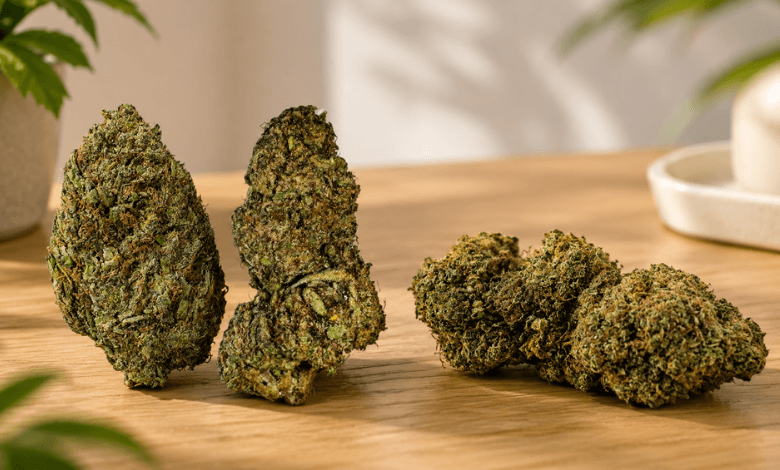
The best THCA flower is indoor-grown, slow-cured, and backed by a full-panel certificate of analysis from a third-party lab. Look for lab-verified THCA content above 20 percent, a published terpene percentage, dense, uneven trichome coverage, and a batch number that matches the jar you receive. Table of contents: How a Batch Earns a Spot Here […]
Aug 23, 2026 · 14 min read
Is THCA Flower Legal? Current Law Explained 2026
Yes, under federal law today, if it comes from hemp and tests at or below 0.3% delta-9 THC by dry weight. On November 12, 2026, that test is replaced, and THCA gets folded into the THC figure that regulators measure against. State law is a separate question, and only seven states still use the delta-9 […]
Aug 20, 2026 · 14 min read
Is THCA Legal in Connecticut? Complete 2026 Legal Guide
THCA Legal Status in Connecticut: Yes, but with major limits, THCA is not banned as a substance in Connecticut, but it is tightly regulated. Because the state measures hemp by total THC (0.3% or less on a dry-weight basis, with THCA counted in), most high-THCA products such as ATLRx THCA Flower exceed the hemp limit […]
Jul 12, 2026 · 10 min read
Is THCA Legal in Montana? 2026 Law Updates & Guide
THCA Legal Status in Montana: Montana enacted major hemp restrictions in 2025 that go beyond the federal framework. Senate Bill 375 (effective May 2025) bans the retail sale of consumable hemp products containing detectable delta-9 THC unless FDA-authorized. House Bill 49 (effective April 2025) further caps hemp products at 0.5 mg THC per serving and […]
Jun 29, 2026 · 15 min read
Stay Informed
New product releases, hemp law updates, and useful cannabinoid guides.