CBD vs Delta 10 THC
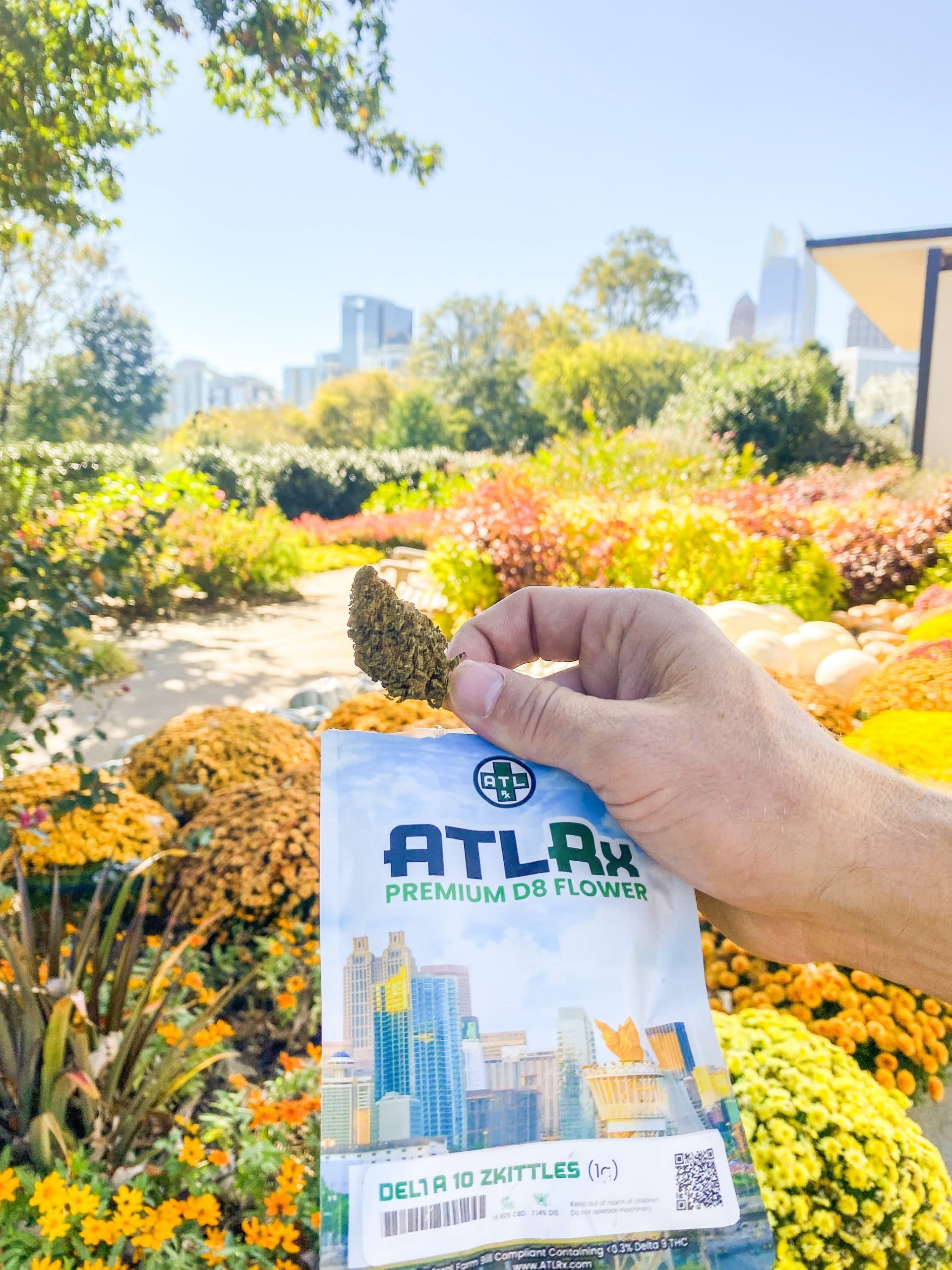
CBD has been the reigning cannabinoid of all; I mean, it’s called the CBD industry for a reason. Most alternate cannabinoids are created with CBD oil extracted; it serves as the base for the distillate before solvent processing occurs. Nothing has changed with the latest of the Delta family—Delta-10 THC.
Delta 10 THC began making its way on the CBD market this past summer with a bit of mystery and excitement behind it. How couldn’t there be excitement? It’s another sibling of Delta 8 THC and Delta 9 THC. Being in a state where neither recreational nor medicinal are legal, of course, there was an immense amount of excitement; it was the next official cannabinoid that was psychoactive. With the increase in numbers, it’s practical to think, well, this must be the end all be all of THC forms, but like the rest of the alternate cannabinoids, that’s not the case—Delta-10 THC is more of a complementary cannabinoid.
Table of contents:
Keep Browsing
Explore Our CBD Categories
Shop real CBD products and collections.
Key Takeaways
- 01CBD as a Base for Alternate Cannabinoids: The blog post emphasizes the foundational role of CBD in the creation of alternate cannabinoids like Delta-10 THC, which begins as a CBD oil derivative before undergoing solvent processing.
- 02Introduction and Legal Context of Delta-10 THC: Delta-10 THC, a psychoactive cannabinoid derived from hemp, is legally differentiated from its more abundant relative, Delta-9 THC, by the Federal Farm Bill of 2018, which only restricts Delta-9 THC.
- 03Diverse Applications of CBD: Highlighting CBD’s versatility, the post details its availability in multiple forms, including oils, gummies, and topicals, facilitating market expansion beyond traditional smoking methods.
- 04Chemical Relationship Between CBD and Delta-10 THC: The post clarifies that although CBD and Delta-10 THC share similar molecular structures, making them isomers, their different arrangements result in distinct properties, with Delta-10 being psychoactive unlike CBD.
What is CBD?
CBD( cannabidiol) is a cannabinoid readily available in hemp and marijuana plants. Both hemp and marijuana are types of cannabis plants, which many often confuse because it’s accessible. But understanding these two different types of cannabis plants could save you a ticket! CBD is primarily derived from hemp plants because of legality issues. In the state of Georgia, the Federal farm bill states that CBD has to have below 0.3% of Delta-9 THC and must derive from hemp since we are in a state that has yet to legalize recreational marijuana. Medicinal is in the beginning stage—where everything provided is low in THC.
CBD comes in various forms such as CBD Hemp Flower, CBD Oil, CBD Gummies, CBD Chocolate, CBD Vapes, and CBD Topicals. This wide array of choices allowed the market to expand to those who weren’t interested in smoking.
The proper expansion of hemp research came with the Federal Farm Bill of 2016. Then in 2018, the Federal Farm Bill was revised, making hemp derivatives and isomers legal and removing the restrictions of hemp crossing state borders. The only THC that was accounted for on the bill was Delta-9 THC, which made headway for Delta-8 THC and, later, Delta-10 THC.
What is Delta-10 THC?
Delta-10 THC is a hemp-derived psychoactive minor cannabinoid that differs from Delta-8 THC and Delta-9 THC quite a bit, in a way that many could have never suspected due to the numerical order of the delta’s. Delta-10 THC wasn’t created with intent; it was an accident. Delta-10 is legal thanks to the 2018 take of the Federal Farm Bill. Delta-10 is known primarily as a sativa but, like Delta-8, this can differ from strain to strain.
Related Articles: What You Need to Know About Delta 10 THC
What are the differences between CBD and Delta-10?
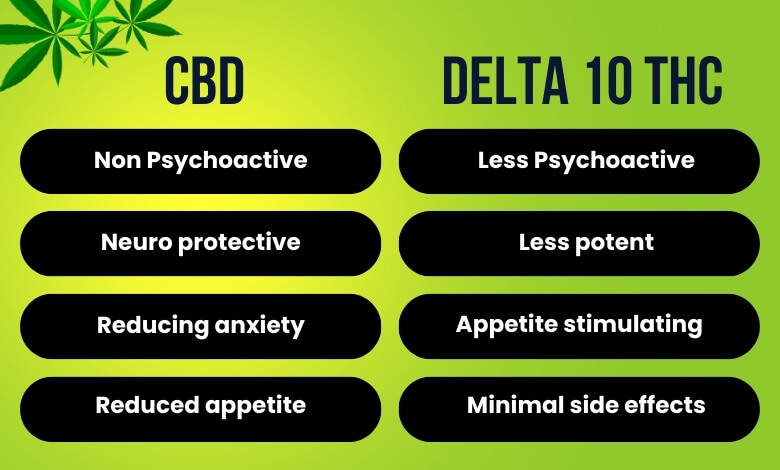
Regarding comparisons, CBD and Delta-10 aren’t significantly different, but some things should be noted. First, Delta-10 is technically a minor cannabinoid while CBD is a major cannabinoid, which means that CBD is more abundant while Delta-10 THC is less abundant. It’s minor. See what I did there? Delta-10 THC is still a derivative despite the fact that the chemical processing it undergoes with CBD oil, similar to Delta-8 THC. CBD is non-psychoactive while Delta-10 THC is psychoactive, yet they work with similar properties. As far as the properties of the chemical structures, Delta-10 THC and CBD have the same molecules present; they’re arranged differently, though. This technically makes them isomers of each other. It’s a similar molecule situation with Delta-9 THC, and HHC, except those cannabinoids, are looped into a double hydrogen bond. The double carbon bond gives a psychoactive push, so Delta 10 has a double carbon bond while CBD has two carbon structures.
It would be remiss to ignore that both of these cannabinoids work together beautifully.
Related Articles:
Why Trust This Guide
- ATLRx has sold third-party lab-tested hemp products out of Georgia since 2019.
- Every real batch we sell is tested by an accredited outside lab, with the Certificate of Analysis published before you buy.
- We operate 3 real physical stores in Georgia — this isn't a drop-shipped storefront.
- Legal information is rechecked and updated as rules change, not published once and forgotten.
Don't Trust the Label. Check the Lab.
ATLRx publishes third-party Certificates of Analysis for real batches so you can verify cannabinoid content before you buy — not just take the package's word for it.
View Lab Results →Have Questions?
Visit an ATLRx store in Georgia and talk to our team.
Real Customers, Real Reviews
What Customers Are Saying
“Exactly what was promised excellent product”
“Really nice high”
“Very good! Gives me energy!”

Jen Hight
Cannabis Industry Expert & Compliance Specialist Jen Hight is a cannabis industry professional with extensive experience in hemp compliance, product development, and consumer education. With a background in regulatory affairs and a passion for helping consumers navigate the complex world of cannabinoids, Jen provides accurate, up-to-date information on hemp legality and best practices. Her work focuses on making cannabis knowledge accessible while ensuring readers understand both the opportunities and responsibilities that come with legal hemp products.
View all articles →Keep Learning
Is THCA Legal? Complete State-by-State Guide 2026
Federally, yes, for now. The 2018 Farm Bill treats hemp-derived THCA as legal hemp so long as the delta-9 THC reading stays at or below 0.3% of dry weight. That flips on November 12, 2026, when Section 781 switches the federal test to total THC, and total THC counts THCA. Your state may already be […]
Aug 20, 2026 · 18 min read
ATLRx vs. Zebra CBD: Which One Should You Actually Buy?
Two brands can both call themselves hemp companies and be built for completely different people. That’s this matchup. Zebra CBD is a CBD house, fifteen products in the shop grid, most of them around fifty bucks, sold directly from a site that lists a Tempe, Arizona mailing address, with a refund guarantee behind it that’s […]
Aug 18, 2026 · 19 min read
ATLRx vs. Area 52: Comparison of Cannabinoid Brands
Two hemp brands. Both launched in 2019. Both sell online, both publish lab work, and both have a following. After that, they stop looking alike. Area 52 is a small-batch, sci-fi-branded gummy house with a tight lineup and a serious guarantee behind it. ATLRx is a Georgia retail operation with nine cannabinoid shelves, north of […]
Aug 15, 2026 · 17 min read
ATLRx vs. The Hemp Collect: An Overview of Cannabinoid Brands
ATLRx and The Hemp Collect are strong at different things. ATLRx is a Georgia-based retail hemp brand with nine cannabinoid categories, walk-in stores, and free shipping on every order. The Hemp Collect is a wholesale-first supplier with a well-built consumer storefront and deep expertise in solventless and live extraction. If you’re shopping as a person […]
Aug 12, 2026 · 12 min read
Stay Informed
New product releases, hemp law updates, and useful cannabinoid guides.